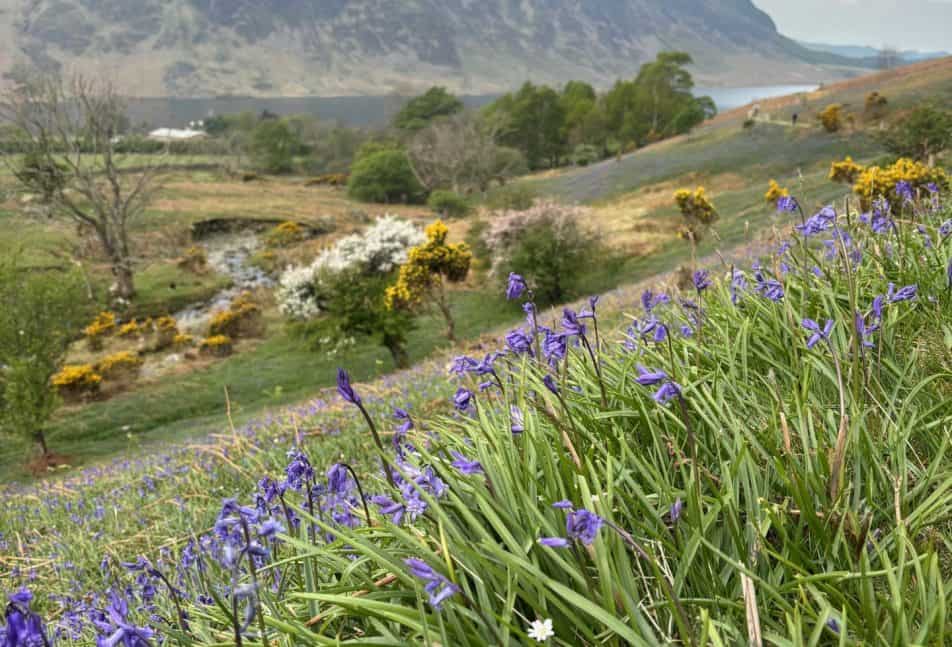

The famous Rannerdale Bluebells are a magical once-a-year event unique to the Lake District, Cumbria. It is our version of the cherry blossoms! In late April to early May as bluebells bloom across English woodlands, a hidden valley near the serene Crummock Water transforms into a stunning sea of blue.
What are the Rannerdale Bluebells?
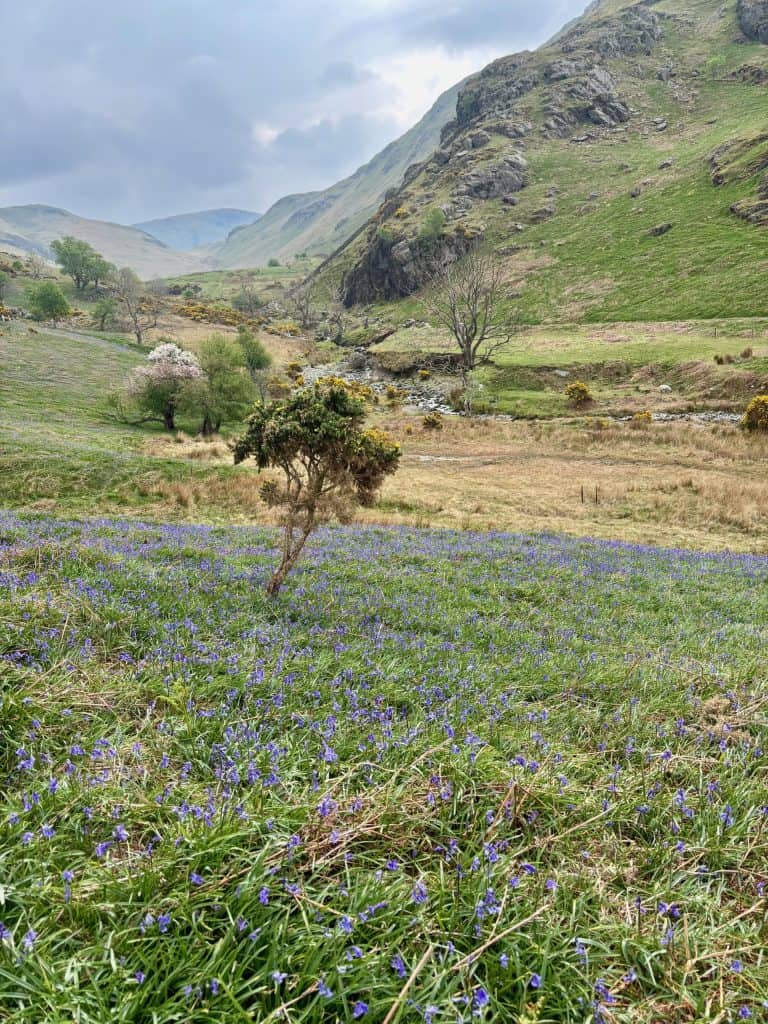
The Rannerdale Bluebells are named for the stunning display of native bluebells that blanket the Lakeland valley of Rannderdale each spring, attracting visitors from far and wide to witness the annual spectacle. You typically find bluebells in woodlands, so Rannerdale is unique. Here they sweep across an open hillside, creating a beautiful blue tapestry. As you walk through the valley, a delicate, sweet scent fills the air, adding to the enchantment of your visit.
British vs. Spanish Bluebells: What’s the Difference?
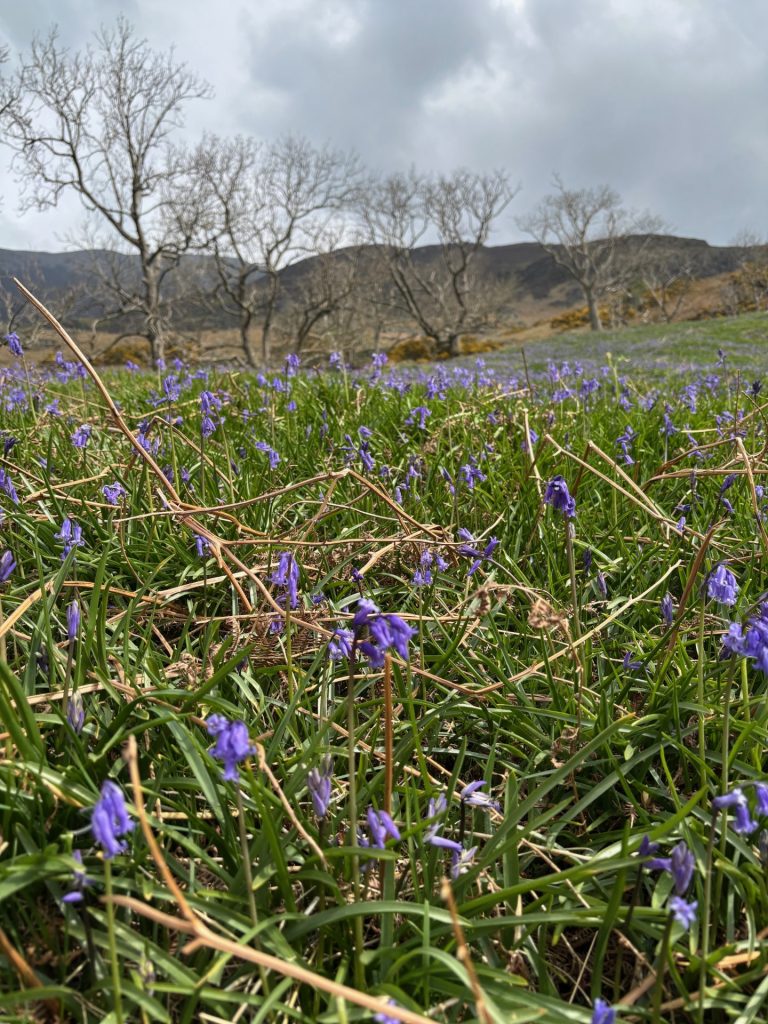
The Rannerdale Bluebells are native British bluebells –Hyacinthoides non-scripta- and can be easily distinguished from their Spanish relatives, once you know what to look for. Native bluebells have slender, tubular flowers that droop forwards, giving them a graceful nodding appearance. Their blooms are a rich violet-blue, and their leaves are thinner and more delicate. Spanish bluebells (Hyacinthoides hispanica), often found in gardens, stand upright, are a paler purple colour, and have broader leaves. For more information on native bluebells, see this page from the Woodland Trust: Click here
Why the Rannerdale Bluebells Are Special
The bluebells are a stunning natural wildflower phenomenon, growing entirely without human planting or intervention. The bluebells are important for local conservation efforts and supporting biodiversity. Therefore, if you look closely, you may see a butterfly or two enjoying the fragrant blooms.
The Legend of the Rannerdale Bluebells
I’ve always been fascinated by local folklore, and it’s the legend of the Rannerdale Bluebells which makes these flowers extra special. As you walk through the valley of blue, take a moment think of this ancient legend and let your imagination wander…
In the 11th Century, Rannerdale was home to both native Cumbrians and Norse settlers, but their way of life was under threat from Norman invaders. The locals fought fiercely to protect their land and homes. Legend has it that a Norman army was lured into the valley- sometimes called the “Hidden Valley” because it is almost invisible from the road or nearby Crummock Water.
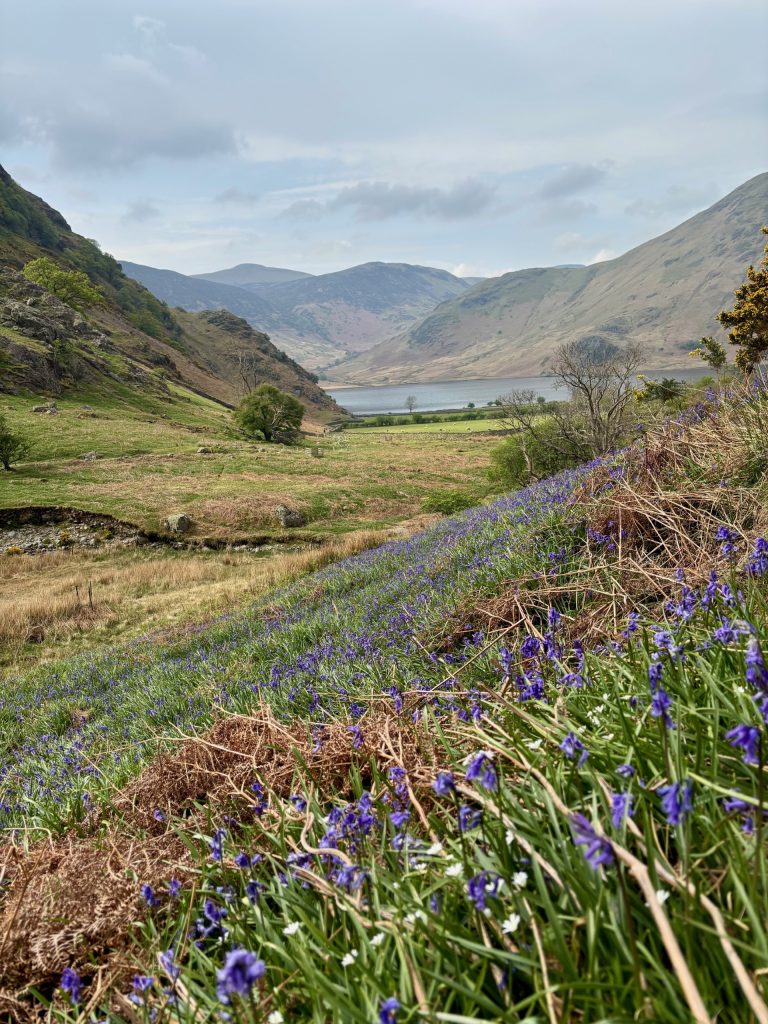
The locals were said to have ambushed the Norman army, surrounding them completely. According to the tale, the bluebells grew from the blood of the slain Normans. Other versions claim that the flowers serve as a tribute to the brave Cumbrians who defended their land. Either way, the bluebells are a reminder each year of that great battle.
Whilst there is no firm evidence that a battle took place at Rannerdale, it’s believed that the folklore may have originated from the 1930s novel The Secret Valley by Reverend Nicholas Size. Regardless of its historical accuracy, the legend adds a rich, mystical layer to the experience of walking through the bluebells each spring. The blooms standing as a poignant reminder of a troubled time in Cumbrian history.
When Is the Best Time to See the Rannerdale Bluebells?
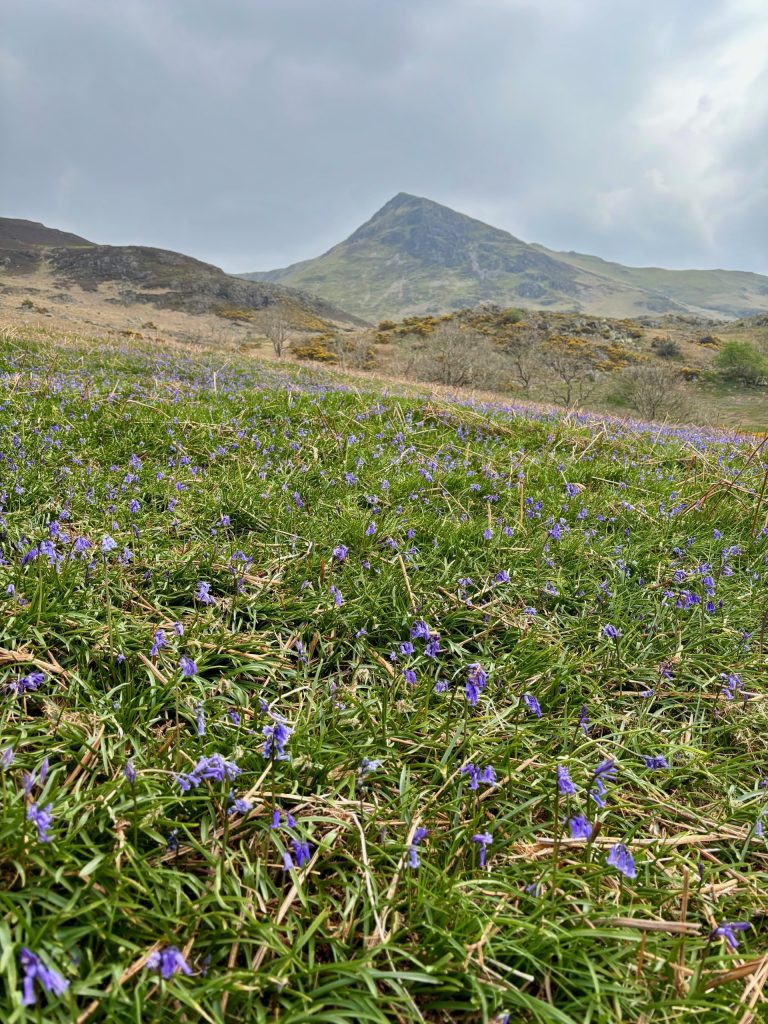
The best time of year to see the bluebells in bloom is usually early May. Whilst bluebells begin to pop up as early as mid April in the Lake District, it’s in May that they reach their peak. Towards the end of the month, as temperatures rise, the flowers begin to fade and wither — so timing your visit for late April to mid-May gives you the best chance of catching them at their most spectacular.
Crowds tend to gather in Rannerdale on the weekends and school holidays, so if you’d prefer a quieter experience, try visiting on a weekday, early in the morning or later in the evening.
Sunny, dry days are ideal for the walk, and bluebells also appear far more vibrant in the sunlight.
Tips for Visiting the Rannerdale Bluebells
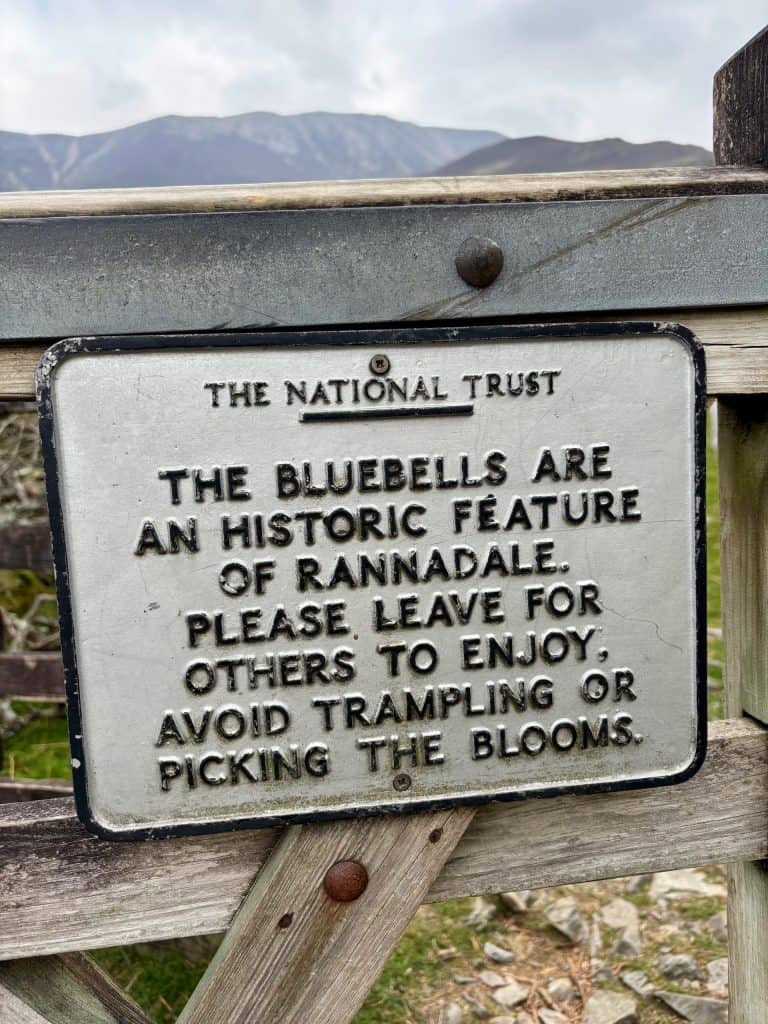
The conservation of these beautiful native flowers is paramount, and they must be treated with respect. As you walk through the valley, please stick to the clearly marked paths, and avoid crossing any rope barriers.
Dogs are more than welcome- this is a wonderful walking route to enjoy with your four-legged companion, but please do keep them on a lead. With so many interesting smells around, it’s therefore easy for them to wander and accidentally trample the bluebells.
As with anywhere in the Lake District, please take all your litter home with you to protect this beautiful environment. And whilst it goes without saying, it’s worth the reminder. The Rannerdale Bluebells are for everyone to enjoy with your senses, please don’t pick the flowers.
Best Tips for Photographing the Bluebells
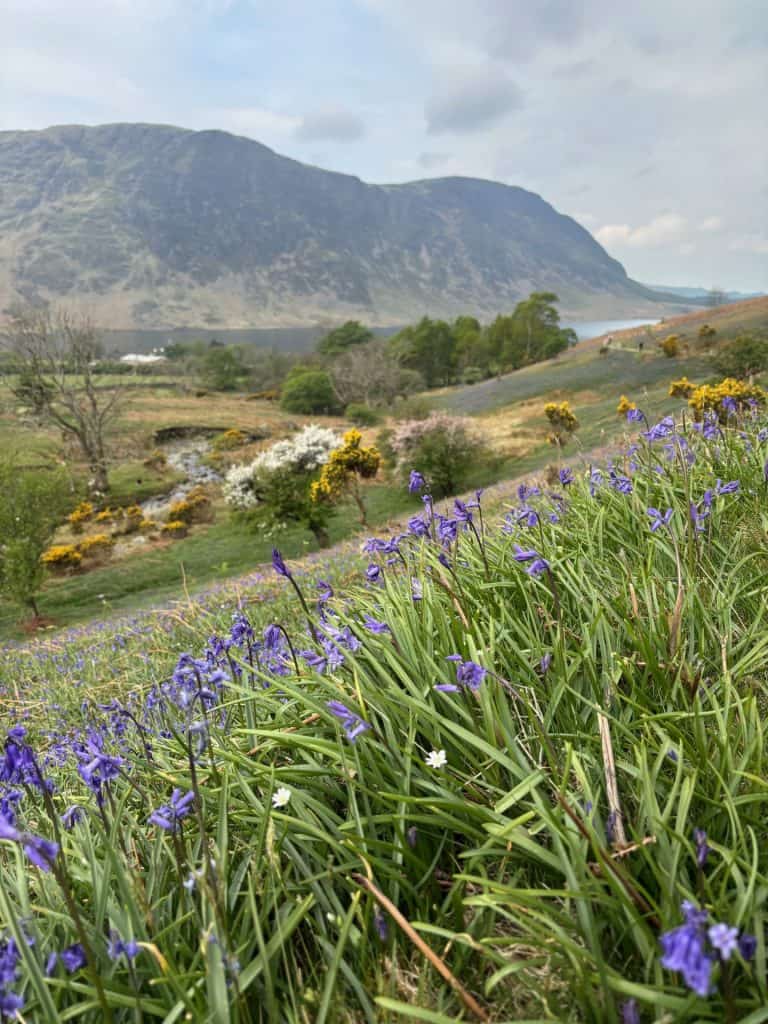
I loved bluebells from different angles- it’s amazing how light and landscape can change your perspective. One of my favourite photos was taken looking back along the trail, the blue carpet leading the eye towards Crummock Water in the distance.
You might also catch The Hawthorn trees beginning to bloom, their pinky-white blossoms adding a magical touch to your photos. It’s the kind of scene that makes for truly memorable images you’ll cherish for years to come.
Where to Park
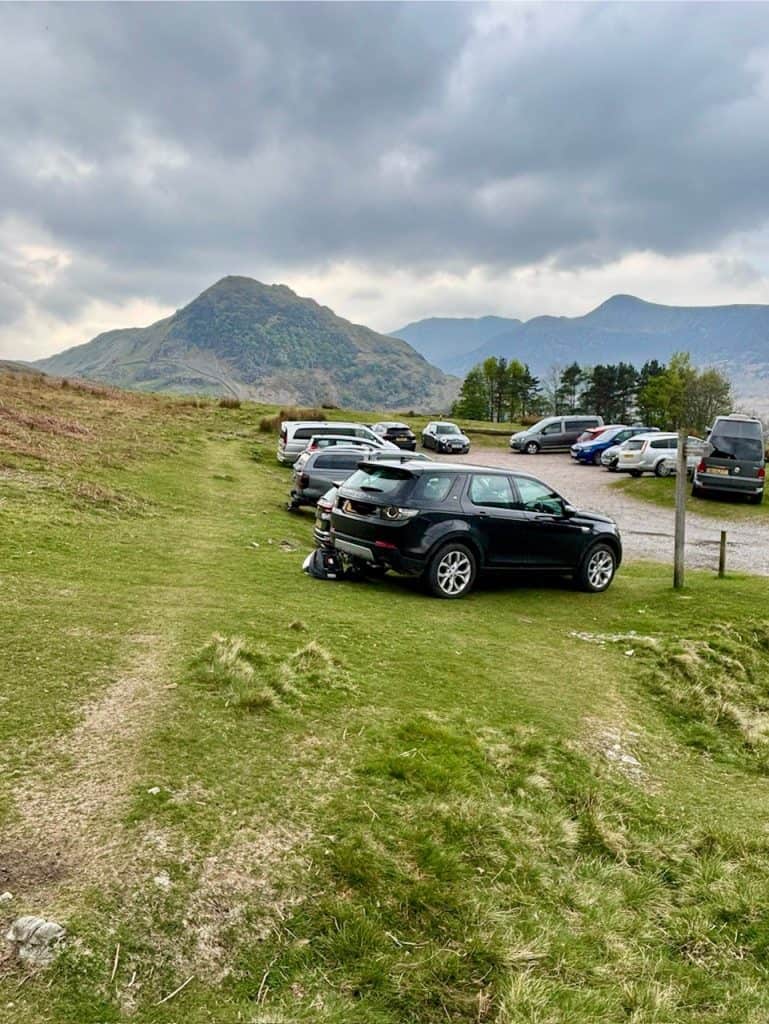
Parking is at the free of charge Rannerdale Knotts car park, conveniently located at the start of the trail. However, during bluebell season, it’s best to arrive early to secure your spot. If the car park is full, there are several laybys and smaller free smaller car parks along the B5289, which runs alongside Crummock Water.
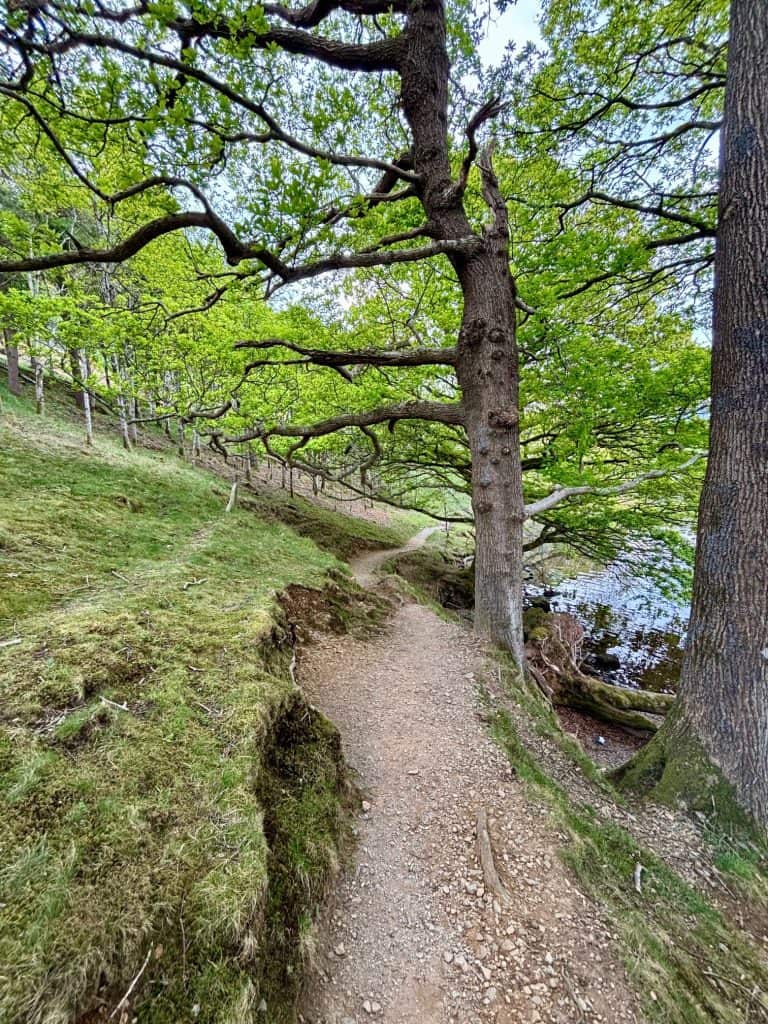
Personally, I parked in a layby just before reaching the Rannerdale Knotts car park. From there, you can either walk along the roadside verge or, as I did, take one of the paths down to Crummock Water, for a peaceful stroll along the stunning water’s edge.
Rannerdale Knotts Car Park
- Postcode: CA13 9UY
- what3words: ///pursuing.panther.subsystem
- Grid Reference: NY 16227 19301
- 6-Digit Grid Reference: NY162193
Rannerdale Bluebells Walk: A Complete Route Guide
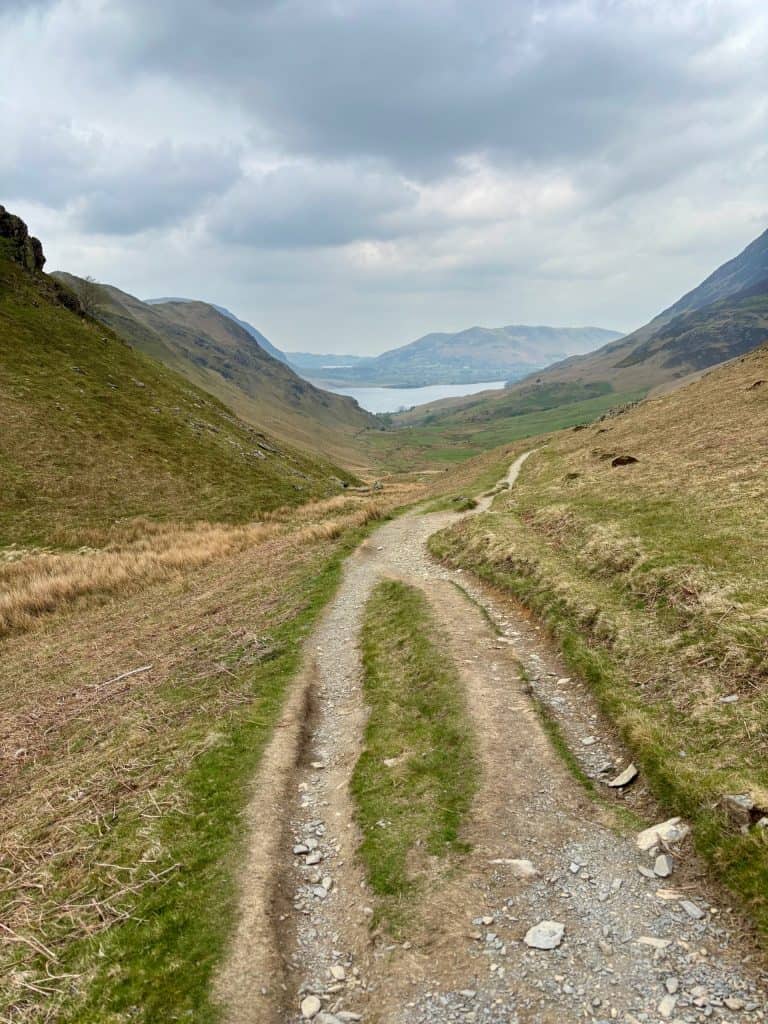
Difficulty: Easy to moderate depending on the route you choose
Length: 1.5-5.5 miles depending on your selected route
The official start of the trail is a well defined, level path directly behind the main car park.
Which route to take?
Easy Route-Rannerdale Valley Only
Distance: ~1.5 miles
Elevation Gain: 150m
Walk Time: Up to 1 hour (depending on how long you choose to admire the bluebells)
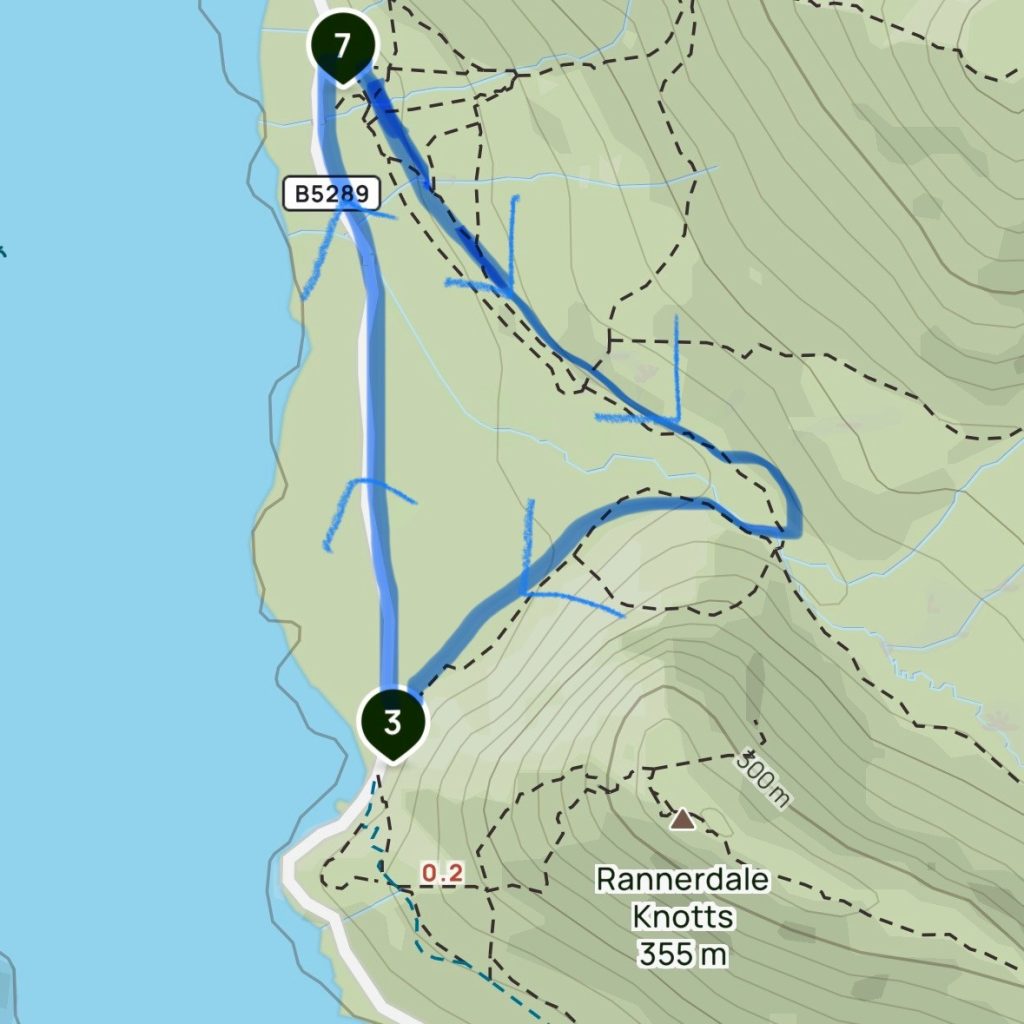
Walk Highlights: The bluebell-covered valley floor, vibrant yellow gorse shrubs in full bloom, flowering hawthorn trees, and stunning views of Crummock Water.
This route is perfect if you’re looking for a gentler circular walk to experience the bluebells and the beauty of Rannerdale valley. Start at the car park and follow the clearly marked path through the flowers. You’ll soon see a fork in the trail; one path continues up the hill into the valley, while the other veers to the right towards a bridge crossing Rannerdale Beck.
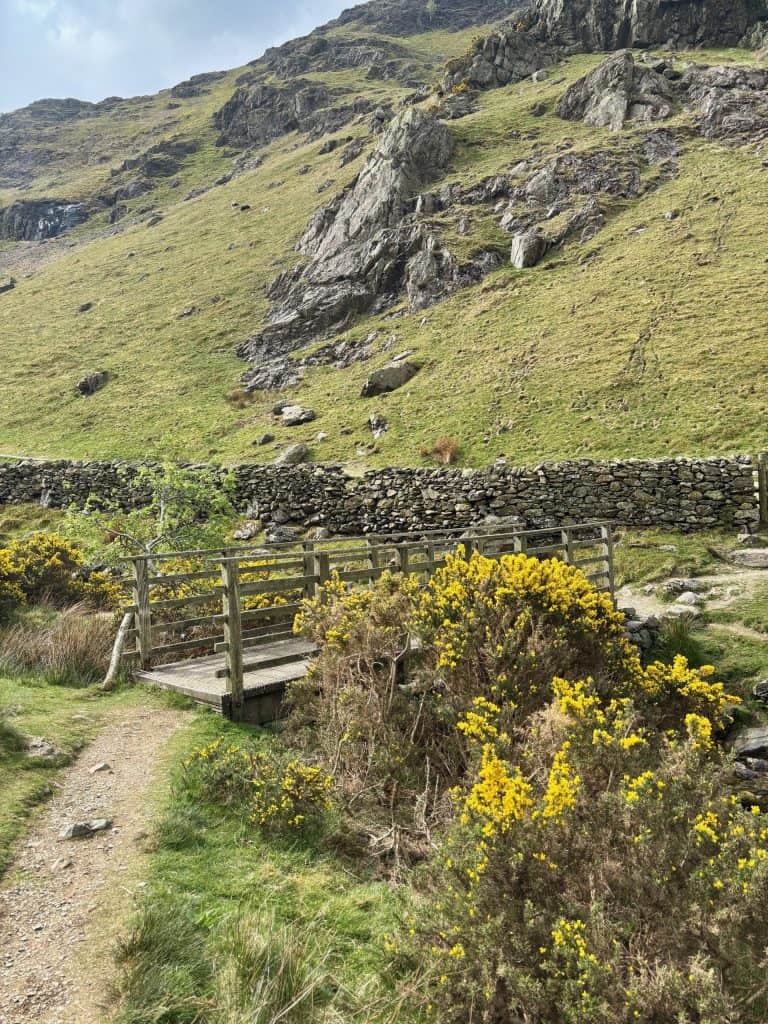
Cross the bridge and the path will lead you back towards Crummock Water, offering views of the bluebells from the opposite side of the valley. From here, you’ll also have a clear view of the familiar triangular peak of Whiteless Pike in the distance.
Keep following the path, which is marked by rope barriers so you won’t miss a turn. The trail skirts around the base of Rannerdale Knotts, heading towards the main road. When you reach the road, I recommend crossing over to take a moment to watch the adorable Herdwick lambs in the field with their mothers- a quintessential Lakeland sight in the spring.
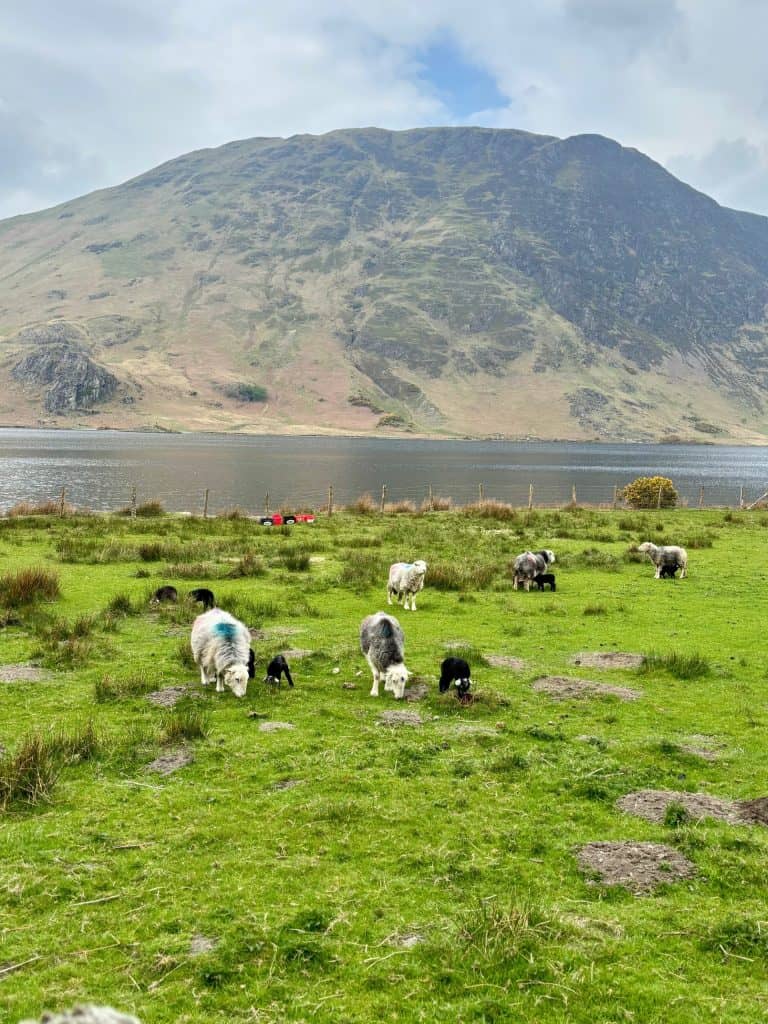
Once you’re ready to return, simply walk north along the B5289 back towards the car park. There’s a small incline here, and take care when walking along the roadside.
Moderate Route- Rannerdale Knotts
Elevation Gain: 310m
Distance: 4–6 miles, depending on your chosen route
Walk Highlights: The bluebell-filled valley, spectacular views of Crummock Water and Buttermere
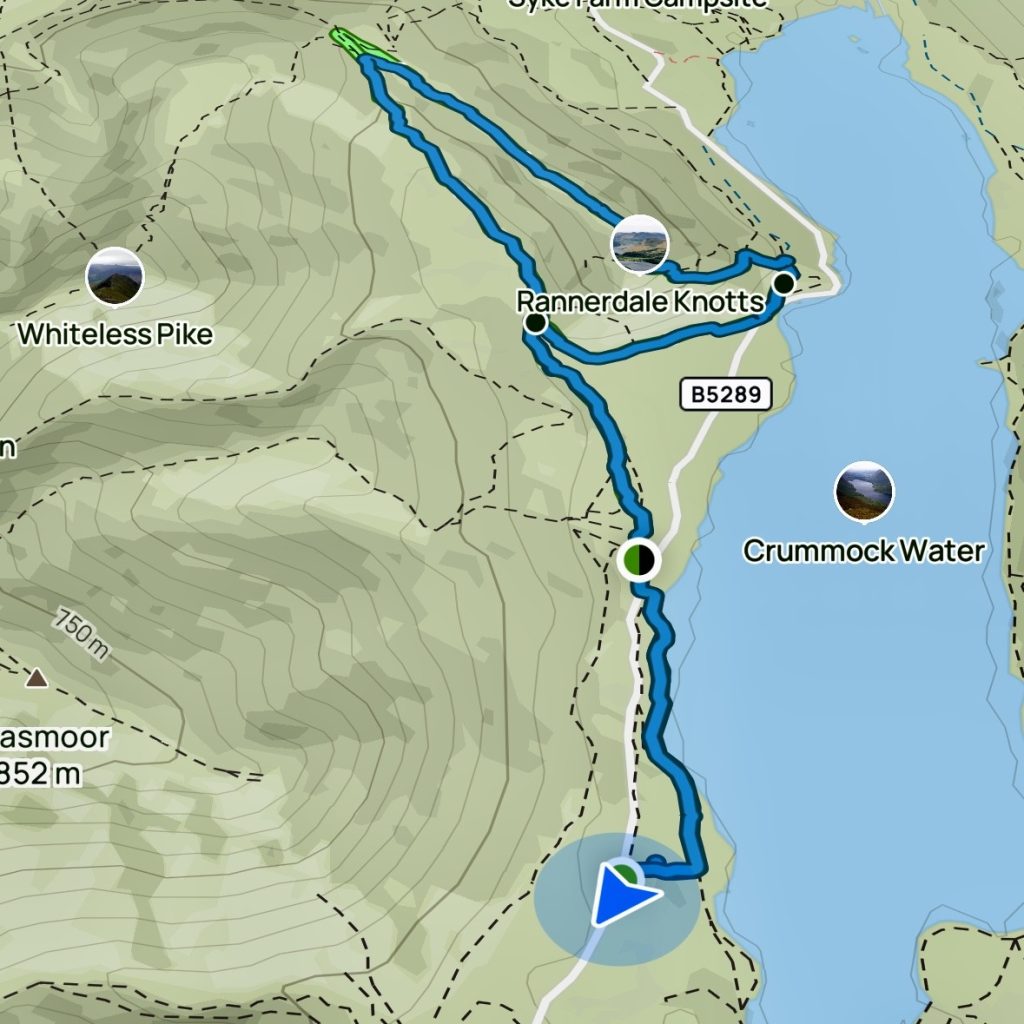
You can begin this walk from the main trail, but I recommend parking at one of the laybys or the small car park near High Wood, just before you reach the Rannerdale Knotts car park. From there, several footpaths cross the fields and lead down to the main path running alongside Crummock Water, which is a peaceful and scenic way to start your hike.
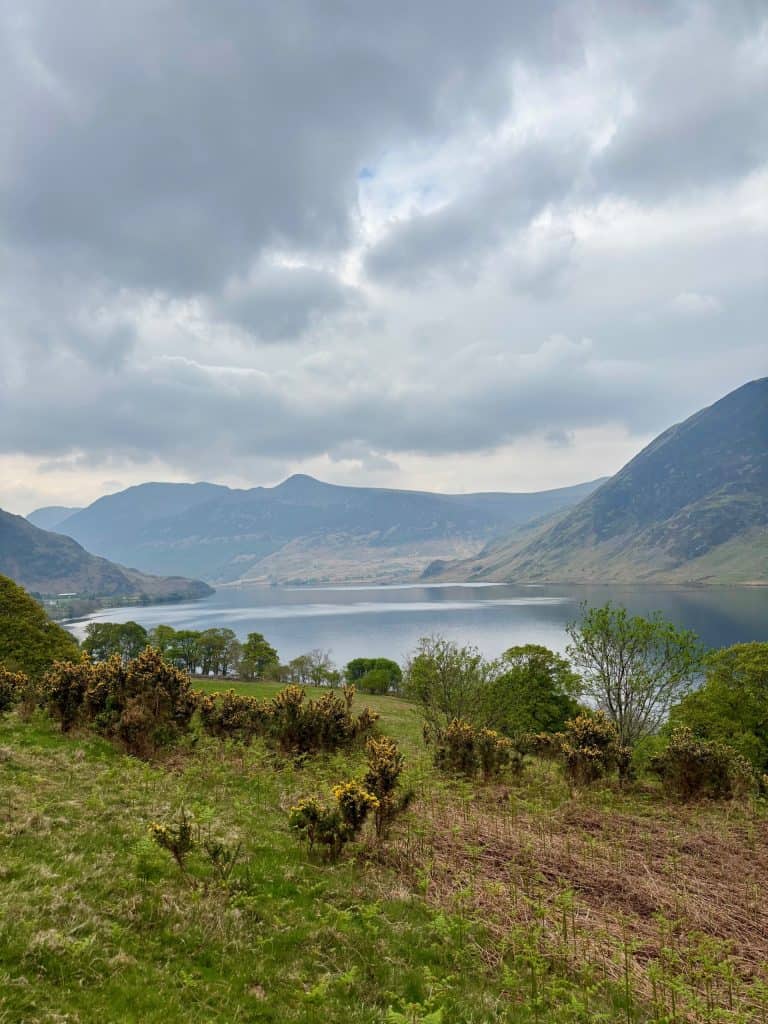
Once you’ve walked alongside Crummock Water, look out for a path that veers up to the left towards the road. Follow this path and you’ll come to a gate, which leads onto a grassy verge beside the main road. Cross the road carefully, and you’ll find the main Rannerdale Knotts car park directly ahead.
Begin the walk by following the same trail described in the “Easy Route” above.
Once you reach the road, instead of heading back uphill, turn left and walk along the road towards Buttermere. Keep an eye out for a path on your left — this marks the start of the trail up Rannerdale Knotts.
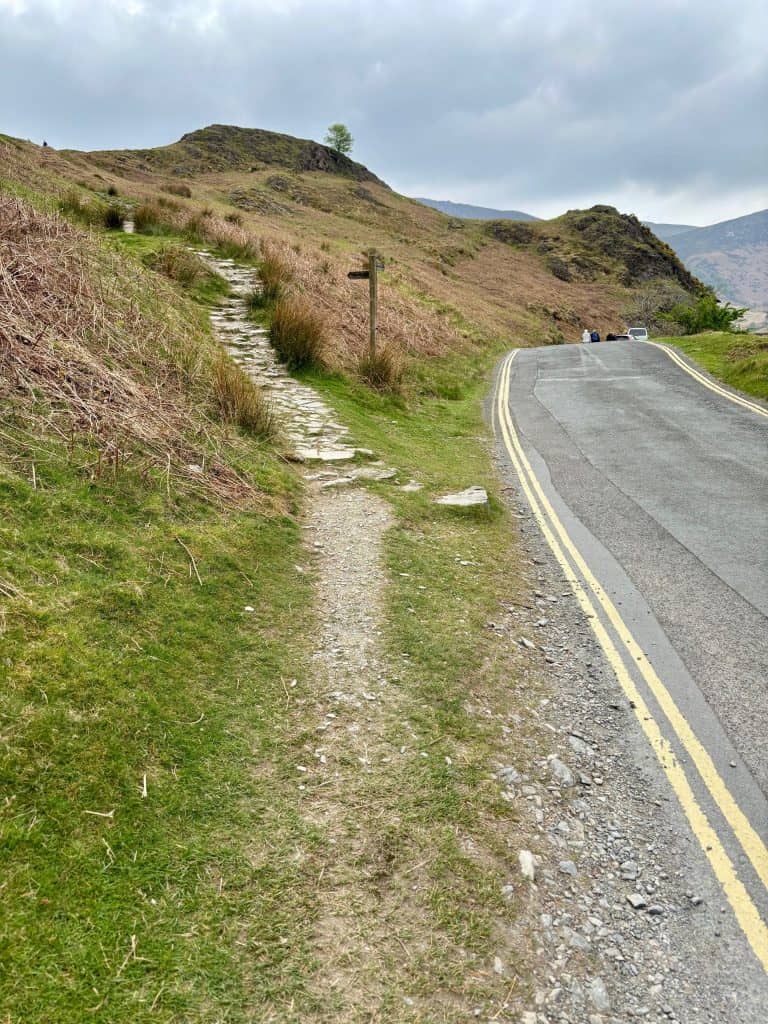
Follow this path as it climbs steeply up Rannerdale Knotts. It’s a vigorous ascent that requires a decent level of fitness. Don’t worry, there are spots along the way to pause and take in the spectacular views over Crummock Water. It’s the perfect excuse to snap some photos and take a sip of water.
Rannerdale Knotts Summit
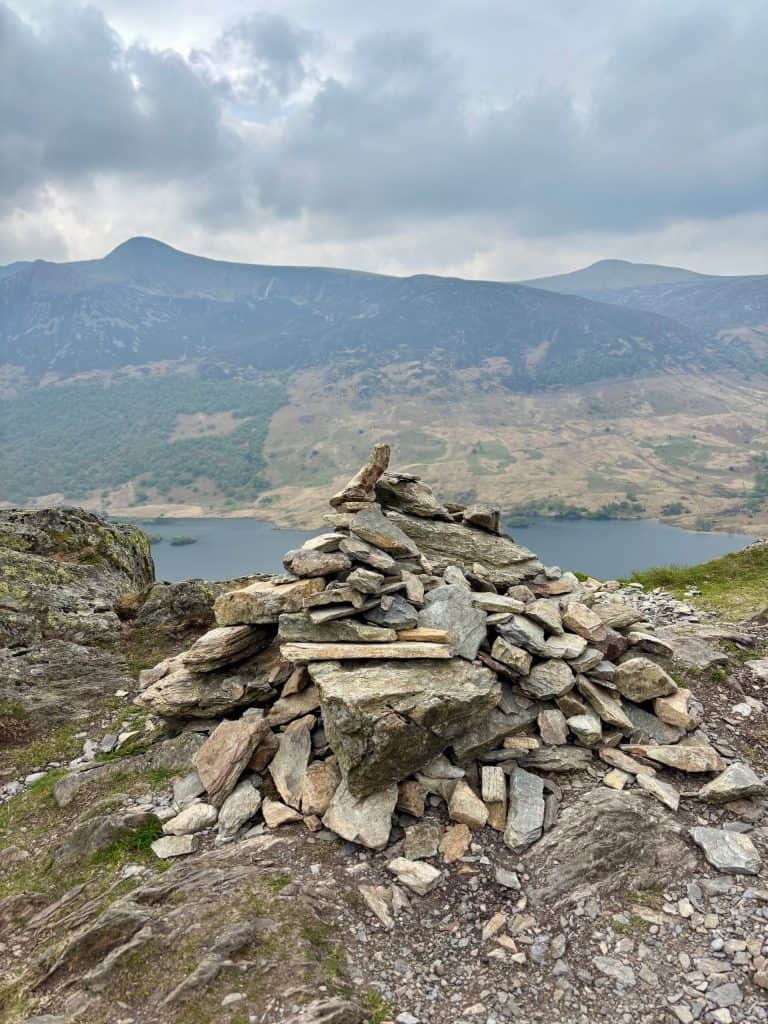
Once you reach the summit of Rannerdale Knotts, take a moment to enjoy the panoramic views. To your left, you’ll see Buttermere, to the right, in the distance, lies Loweswater. Views of the surrounding fells are equally impressive, with Red Pike (755m) and High Stile (807m) rising prominently in the landscape.
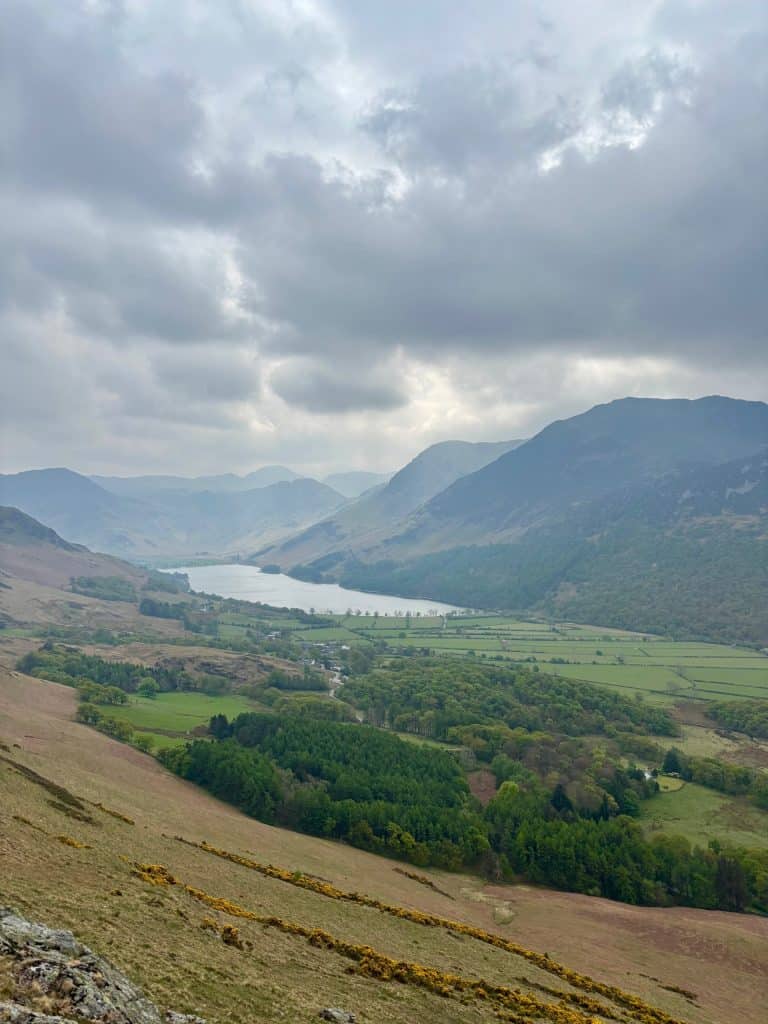
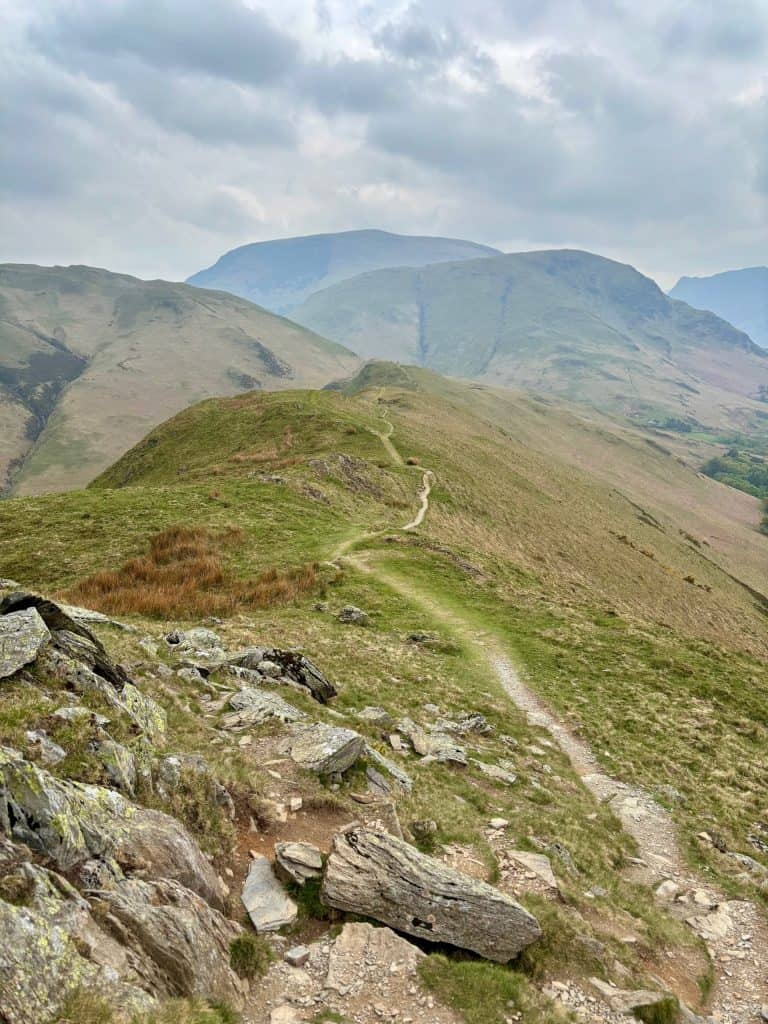
When you’re ready to descend, follow the path straight ahead from the summit. It’s a well-defined trail, mostly level, with a mix of grass and pebbles underfoot. The path then turns to the left, and heads back downhill towards the car park.
A Last Word on the Rannerdale Bluebells
Exploring Rannerdale Valley and Rannerdale Knotts to witness the bluebells in full bloom will create lasting memories. The wildflowers, the stunning landscape, the tranquil Crummock Water, and the iconic Herdwick sheep all add to the charm. Seeing the famous bluebells here truly feels like a bucket list experience.
However, it’s important to visit Rannerdale responsibly, ensuring that the bluebells continue to bloom in all their glory each spring.
Have you experienced the Rannerdale bluebells? Share your thoughts and experiences in the comments below!
If you liked this, you might enjoy this post- Bowness Knott Walk